API 602 is the American Petroleum Institute standard governing compact forged steel gate, globe, check, ball, and plug valves in sizes NPS 4 and smaller. It defines the pressure classes, material grades, trim requirements, and testing protocols that make these valves the preferred choice for critical piping in oil and gas, refining, chemical, and power generation industries worldwide.
For procurement engineers, project managers, and plant engineers specifying valves for high-pressure, high-temperature piping systems, API 602 is one of the most referenced standards in the industry. Yet misunderstanding its pressure classes, material requirements, and trim designations leads to costly specification errors, delayed procurement, or — worse — premature valve failure in service.
This guide draws on EMS Valve’s 45 years of forged valve manufacturing experience to explain everything you need to know about API 602 forged steel valves: what the standard requires, how pressure classes map to real-world operating conditions, which materials suit which service environments, and how to specify correctly for your next project.
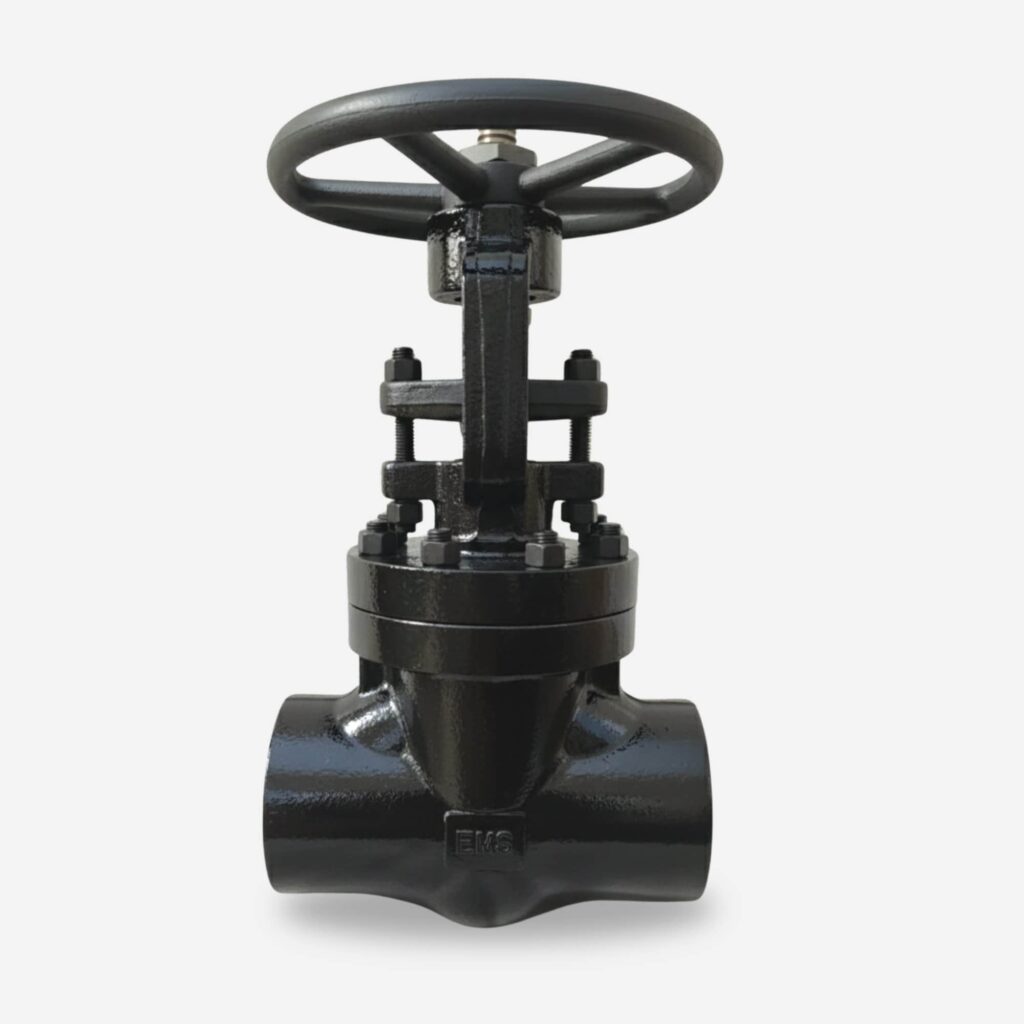
What Is API 602? An Overview of the Standard
Published by the American Petroleum Institute, API 602 (Compact Steel Gate Valves — Flanged, Threaded, Welding, and Extended-Body Ends) specifies minimum design, material, dimensional, and testing requirements for compact steel valves used in petroleum refinery and related piping.
The standard applies to valves in sizes NPS ½ through NPS 4 (DN 15 to DN 100), in pressure classes 800, 1500, 2500, and 4500. Valves manufactured to API 602 must also conform to the pressure-temperature ratings and face-to-face dimensions of ASME B16.34, ensuring interchangeability across global supply chains.
Key scope of API 602: Gate valves, globe valves, check valves, ball valves, and plug valves — all in forged steel construction — for use in upstream and downstream petroleum industry piping, including refineries, petrochemical plants, and power generation facilities.
API 602 vs. ASME B16.34: What Is the Difference?
ASME B16.34 is a broader standard covering all valve types with flanged, threaded, and welding ends across a wide range of sizes and pressure classes. API 602 is a more specific standard that references ASME B16.34 pressure-temperature ratings but adds requirements unique to compact forged steel construction: body wall thicknesses, end connection geometries, trim configurations, and mandatory testing for the refinery and petrochemical environment.
In practice, a valve marked “API 602 / ASME B16.34” meets both standards — this dual compliance is standard practice and expected by most oil and gas end-users and EPCs.
API 602 Pressure Classes Explained
Pressure class is the single most important parameter when specifying an API 602 forged steel valve. Each class determines the maximum allowable non-shock pressure (MAWP) at a given temperature for a given body material. The four classes defined in API 602 are:
| Pressure Class | Typical MAWP at 38°C / 100°F (A105N) | Common Applications |
|---|---|---|
| Class 800 | 138 bar / 2,000 psi | General hydrocarbon service, steam, water, instrument lines |
| Class 1500 | 260 bar / 3,750 psi | High-pressure steam, gas injection, wellhead equipment |
| Class 2500 | 430 bar / 6,250 psi | High-pressure steam generators, natural gas compressor lines |
| Class 4500 | 770 bar / 11,250 psi | Ultra-high-pressure gas pipelines, critical offshore applications |
Important: These MAWP values apply to ASTM A105N carbon steel at 38°C. Allowable pressures decrease at elevated temperatures. Always consult ASME B16.34 pressure-temperature tables for the specific body material and design temperature of your application.
Class 800 is by far the most widely used pressure class and accounts for the majority of API 602 forged valve procurement globally. For most refinery utility services, instrument connections, and auxiliary lines, Class 800 provides adequate pressure margin with the most economical forged body wall thickness. Class 1500 and above are specified when the process design pressure or hydraulic test pressures exceed what Class 800 can accommodate.
Body Material Grades for API 602 Forged Steel Valves
API 602 permits a range of forged steel body materials, selected based on the process fluid, operating temperature range, and corrosion or erosion requirements.
| Material Grade | Designation | Temperature Range | Typical Service |
|---|---|---|---|
| Carbon Steel | ASTM A105N | –29°C to +425°C | General hydrocarbons, steam, water, air |
| Austenitic Stainless Steel | ASTM A182 F316 / F316L | –196°C to +538°C | Corrosive fluids, acids, cryogenic service |
| Low-Alloy Steel (1.25Cr-0.5Mo) | ASTM A182 F11 | –29°C to +593°C | High-temperature steam, hydrogen service |
| Alloy Steel (2.25Cr-1Mo) | ASTM A182 F22 | –29°C to +649°C | High-temp / high-pressure steam, refinery heaters |
| Duplex Stainless Steel | ASTM A182 F51 / F53 | –46°C to +316°C | Sour service (H₂S), offshore, seawater |
For most carbon steel applications, ASTM A105N (the “N” denotes normalized heat treatment) is the default choice and is required by many process specifications. For services above 425°C, chromium-molybdenum alloy steels (F11, F22) provide superior creep resistance. For environments containing chlorides or wet H₂S, stainless steel or duplex grades offer the necessary corrosion resistance.
API Trim Designations: What Do They Mean?
“Trim” refers to the internal components of a valve in contact with the process fluid: the stem, seat rings, disc, and back seat. API 602 uses standardized trim numbers to define the material combination of these components. Trim selection is critical for erosion and corrosion resistance in the specific process fluid.
| API Trim No. | Seat / Wedge Material | Stem Material | Typical Application |
|---|---|---|---|
| Trim 8 | 410 Stainless Steel | 410 SS | General carbon steel valve service |
| Trim 5 | Integral hard-faced (Stellite) | 410 SS | Erosive / flashing service |
| Trim 12 | 316 Stainless Steel | 316 SS | Stainless steel body valves, corrosive service |
| Trim 16 | Alloy 6 (Stellite) hard-faced | 410 SS | High-velocity steam, abrasive fluids |
Stellite hard-facing (Trim 5, 16) significantly extends service life in abrasive or erosive applications by increasing the hardness of seating surfaces to 40–55 HRC. For sour service environments governed by NACE MR0175 / ISO 15156, trim materials must meet additional hardness and heat treatment requirements — always confirm with your valve manufacturer.
End Connections Available for API 602 Forged Valves
- Socket Weld (SW) — ASME B16.11: The most common choice for small-bore, high-pressure piping. Pipe inserts into the socket and is fillet-welded. Excellent leak tightness, but requires post-weld heat treatment (PWHT) in certain services.
- Butt Weld (BW) — ASME B16.25: Full-penetration weld joint. Preferred for critical services (hydrogen, high-temperature steam) where any risk of crevice corrosion at the socket must be eliminated.
- Threaded (NPT / BSP) — ASME B1.20.1: Faster to install, but limited to non-critical services due to thread leak potential. Typically restricted to instrument connections and utility lines.
- Flanged (RF or RTJ) — ASME B16.5: Used where frequent dismantling is required. Raised Face (RF) is standard; Ring Type Joint (RTJ) is specified for Class 2500 and above or wherever positive metal-to-metal sealing is required.
Project specification tip: Many piping specifications default to socket weld for NPS 1½ and smaller, and butt weld or flanged for NPS 2 and larger — but always verify against your project’s piping class document and applicable ASME B31.3 requirements.
Industrial Applications of API 602 Forged Steel Valves
Oil & Gas Upstream and Midstream
Wellhead manifolds, production headers, and gas gathering systems all rely on API 602 forged gate and check valves for their ability to handle high-pressure, sand-laden, or sour fluids. The robust forged body withstands the pressure cycling and mechanical shock common in wellsite environments.
Petroleum Refining
Refineries are the home environment of API 602. Hydrocracker units, fluid catalytic cracking (FCC) units, and amine treating systems all specify Class 800 or 1500 forged valves for bypass, vent, drain, and instrument root valve applications. The standardized trim numbers and materials simplify spare parts management across large fleets of valves.
Petrochemical and Chemical Processing
Ethylene crackers, polymerization units, and specialty chemical plants require precise flow control in small-bore lines at elevated temperatures. Stainless steel (F316) and duplex (F51) API 602 valves handle chloride-bearing and corrosive environments that would rapidly degrade carbon steel alternatives.
Power Generation
High-pressure steam lines, boiler feed water systems, and turbine bypass piping all use API 602 forged valves — typically in F11 or F22 alloy steel — to handle steam temperatures exceeding 500°C at pressures up to Class 2500.
LNG and Cryogenic Service
Austenitic stainless steel (F316L) API 602 valves maintain toughness and leak-tight performance at cryogenic temperatures down to –196°C, making them the specification default for LNG liquefaction, storage, and regasification plants.
Fire Protection Systems
Gate and check valves to API 602 are routinely specified in deluge and foam-water suppression systems in industrial facilities where the valve must remain leak-tight and operable even after prolonged periods of inactivity.
How to Specify an API 602 Forged Steel Valve Correctly
A complete valve specification for procurement purposes should include the following parameters:
- Valve type: Gate / Globe / Check / Ball
- Size: NPS (e.g., NPS 2 / DN 50)
- Pressure class: 800 / 1500 / 2500 / 4500
- Body material: ASTM grade (e.g., A105N, A182 F316)
- End connection: SW / BW / NPT / RF Flanged / RTJ Flanged
- API trim number: (e.g., Trim 8, Trim 12, Trim 5)
- Applicable standards: API 602 / ASME B16.34 / NACE MR0175 (if sour service)
- Testing requirements: API 598 shell, seat, and backseat hydrostatic test
- Special requirements: PMI, low-temperature impact testing, PWHT certification
Avoid these common specification errors: Specifying Class 800 for a service where the hydraulic test pressure exceeds Class 800 MAWP; omitting NACE compliance for H₂S-containing streams; selecting threaded ends for vibrating service; or failing to specify Charpy impact testing for sub-zero design temperatures.
What Makes a High-Quality API 602 Forged Valve?
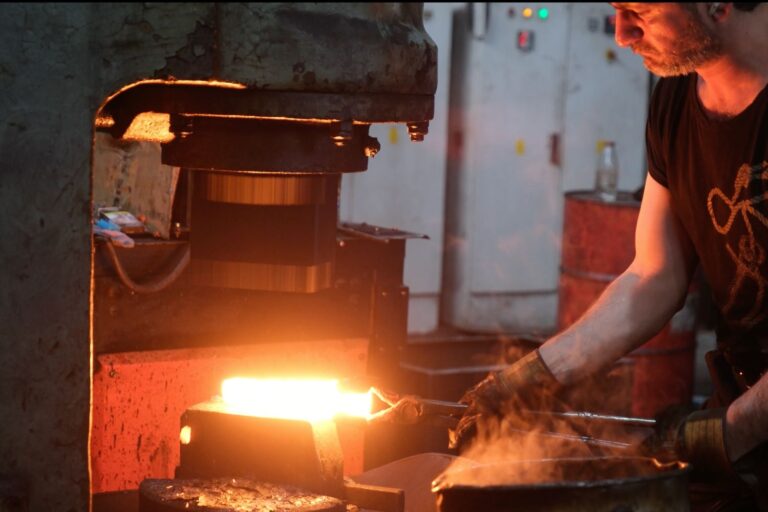
- Forging quality and grain flow: True forged construction aligns the steel grain flow with the body shape, maximizing tensile strength and impact resistance. Demand forging documentation and macro-etch test records to verify grain flow continuity.
- Heat treatment and normalized condition: A105N (normalized) is not merely a material grade — it is a heat treatment requirement. Confirm that all A105N bodies are supplied in the normalized condition per ASTM A105 requirements.
- NDT and positive material identification (PMI): Reputable manufacturers perform 100% dimensional inspection, hydrostatic testing per API 598, and PMI on high-alloy and stainless steel valves to eliminate material mix-ups.
- Third-party certification: CE marking (PED 2014/68/EU), TÜV, ISO 9001, and API licensing are minimum expectations for valves destined for regulated industries. Verify these certificates are current.
- In-house forging capability: A manufacturer with in-house forging offers full supply chain control and material traceability from the forging facility through machining and assembly — and faster turnaround than assemblers who buy forgings externally.
Frequently Asked Questions About API 602 Forged Steel Valves
What is API 602?
API 602 is the American Petroleum Institute standard that specifies requirements for compact steel gate, globe, check, ball, and plug valves for use in refinery and related piping applications. It covers forged steel valves in sizes NPS 4 and smaller, operating at pressure classes 800, 1500, 2500, and 4500.
What are the pressure classes defined in API 602?
API 602 defines four pressure classes: Class 800 (general service, most common), Class 1500 (elevated-pressure applications), Class 2500 (high-pressure service such as steam generation), and Class 4500 (extreme-pressure service in critical oil and gas lines).
What is the difference between API 602 and ASME B16.34?
API 602 covers compact forged steel valves in sizes NPS 4 and smaller specifically for refinery and petrochemical applications. ASME B16.34 is a broader standard covering a wider range of valve sizes and pressure classes. API 602 valves must comply with ASME B16.34 pressure-temperature ratings, but API 602 includes additional requirements specific to compact forged steel construction.
Which material grades are used in API 602 forged steel valves?
Common material grades include: ASTM A105N (carbon steel, general service), ASTM A182 F316/F316L (austenitic stainless steel, corrosive service), ASTM A182 F11 (1.25Cr-0.5Mo, elevated temperature), ASTM A182 F22 (2.25Cr-1Mo, high-temperature service), and ASTM A182 F51/F53 (duplex stainless steel, sour service and offshore).
What end connections are available for API 602 forged valves?
API 602 forged steel valves are available with: Socket Weld (SW) per ASME B16.11, Butt Weld (BW) per ASME B16.25, Threaded (NPT/BSP) per ASME B1.20.1, and Flanged (RF or RTJ) per ASME B16.5. Socket weld and butt weld are the most common in high-pressure and high-temperature piping systems.
How do I select the correct pressure class for my application?
Start with your maximum design pressure and maximum design temperature. Use ASME B16.34 pressure-temperature tables to identify the minimum pressure class that provides adequate margin above the design pressure for your body material grade. Most piping specifications require the valve pressure class to be rated at least 10–25% above the maximum operating pressure at design temperature.
Conclusion
API 602 forged steel valves are the engineering standard for critical small-bore piping in the world’s most demanding process industries. Understanding the interplay between pressure class, body material, trim designation, and end connection type is essential for making the right specification decision — one that balances upfront cost against total lifecycle reliability.
For procurement teams, the manufacturer’s quality management system, in-house forging capability, and documentation rigor matter as much as the valve’s datasheet parameters. A Class 800 A105N gate valve looks the same on paper from five different suppliers — but only a manufacturer with full in-house forging control, robust NDT, and third-party certification can consistently deliver the metallurgical integrity that keeps a refinery running safely for decades.




Contact Us Now
Reach out to our expert team today for tailored valve solutions for your projects.